Personal Growth

Founder and Psychologist
by Dr. Elisha Goldstein
“Many of us have learned that it’s not okay to rest — that our worth is tied to how much we do. Reclaiming rest is an act of courage and a return to our basic goodness.” – Orem Jay Sofer
00:00 – Why communication feels harder than ever in a noisy world
05:00 – How presence helps us stay grounded during conflict
10:00 – Training mindfulness in relationships (not just in meditation)
18:00 – Building resilience by reconnecting with calm and safety
25:00 – The power of intention and curiosity in communication
33:00 – Your heart was made for this: finding courage amid overwhelm
37:00 – Reclaiming rest as an act of self-compassion and healing
45:00 – How slowing down restores creativity, connection, and joy
50:00 – Why community is essential for lasting emotional growth
SHOWNOTES
When it comes to emotional health, most of us have forgotten how to rest – not just physically, but mentally and emotionally.
We live in a world that praises productivity, speed, and performance. Rest feels like a luxury. Slowing down feels unsafe.
But what if rest wasn’t laziness?
What if it’s maintenance for your nervous system – the very foundation for clarity, compassion, and connection?
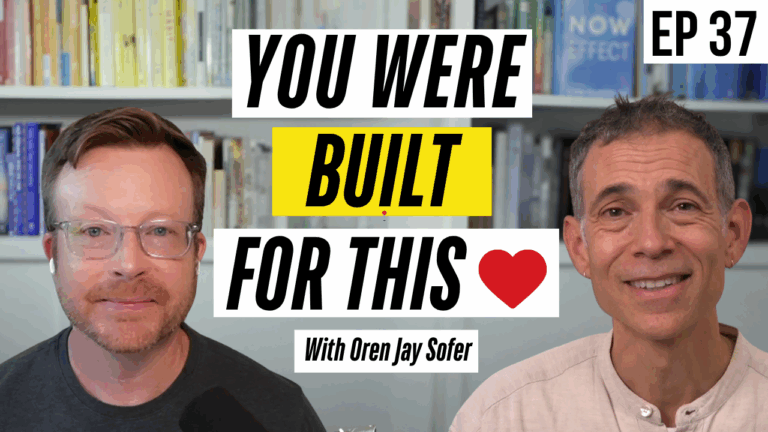
In this episode of The Emotional Longevity Podcast, I sat down with Oren Jay Sofer, meditation teacher, communication expert, and author of Your Heart Was Made for This, to explore how rest, presence, and mindful communication can help us reclaim peace in a noisy, divided world.
Together, we unpack how slowing down helps you reconnect with your innate worth, speak from compassion instead of reactivity, and rediscover the courage to live with an open heart – even when the world feels overwhelming.
Beyond the Myth of “I’ll Rest When I’m Done.”
In a culture that equates worth with productivity, rest often feels like failure.
But as Oren explains, the inability to rest isn’t a personal flaw – it’s a symptom of conditioning.
“Many of us have learned that it’s not okay to rest – that our worth is tied to how much we do. Reclaiming rest is an act of courage and a return to our basic goodness.”
From mindfulness to somatic awareness, Oren shows how true rest is less about stopping and more about reconnecting – with the body, with nature, and with what actually matters.
When we slow down, we begin to hear what’s underneath all the noise: our needs, our emotions, and our natural rhythm.
And that rhythm, he reminds us, is what allows us to stay connected – to ourselves and to others – even when life feels chaotic.
In This Episode You’ll Learn:
Why communication feels harder than ever – and how mindfulness changes that
The three foundations of mindful communication: presence, intention, and attention
How to recognize stress patterns and return to presence during conflict
The truth about rest – and why your nervous system depends on it
What “self-compassion in action” looks like in everyday life
How reconnecting with nature restores balance and belonging
Why community and grace are essential for emotional resilience
From Restlessness to Rest
We’ve been trained to override our body’s signals – to push through exhaustion, numb out with busyness, and ignore the quiet voice asking us to slow down.
But as Oren shares, healing starts by listening again.
That means noticing fatigue without judgment, taking small pauses throughout the day, and finding gentle ways to reconnect – a short walk, a breath, a moment of stillness.
Rest isn’t the absence of effort.
It’s an act of care.
It’s how we remember we’re already enough – before the doing, before the proving.
What This Means For You
If you’ve been feeling scattered, burnt out, or disconnected from yourself, this episode is your reminder that rest is not optional – it’s essential.
Here’s how you can start today:
Challenge your beliefs about rest. Ask yourself, “Where did I learn that slowing down is wrong?”
Start small. Take 30 seconds between tasks to breathe or look outside. Tiny moments create big shifts.
Reclaim presence. When stress rises, pause and feel your body – your hands, your breath, your feet on the ground.
Bring grace to yourself. You’re allowed to be tired. Tenderness restores more than toughness ever will.
Connect to others. Community helps regulate our nervous system. We heal in relationships, not isolation.
Your heart already knows how to rest. It’s your mind that needs reminding.
Final Thoughts: Remembering Your Heart
Rest is not the opposite of productivity – it’s what makes true contribution possible.
When you slow down enough to listen, your heart naturally opens.
And from that place, communication becomes clearer, compassion flows more freely, and presence becomes your power.As Oren reminds us:
“Our hearts were made to meet life – even its chaos – with courage, integrity, and love.”
Want to Go Deeper?
Uncover the Power Within isn’t just a coaching program, it’s a supportive space to strengthen emotional resilience and build meaningful connection. With the support of a trusted community and science-backed guidance, you’ll learn how to regulate your nervous system, reduce overwhelm, and create more emotionally safe, fulfilling relationships—starting with the one you have with yourself.
If you’re ready to live with more intention, clarity, and connection, schedule a call with me to explore what’s possible.
Subscribe to The Emotional Longevity Podcast for more conversations that inspire personal growth, emotional resilience, and thriving relationships.
If this episode resonated with you, consider sharing it with someone who may be feeling disconnected or navigating relationship challenges. It might be the reminder they need – that healthy love isn’t about perfection, but about presence, repair, and learning to grow together. They can listen to this episode of The Emotional Longevity Podcast or read this blog.
Take care of yourself – and remember, every strong relationship starts with emotional awareness, compassion, and a willingness to show up.