Personal Growth

Founder and Psychologist
by Dr. Elisha Goldstein
“Most people who suffer abuse actually overcorrect – they become super gentle, sensitive, and kind.” – Joe Nucci
00:00 – Why “hurt people hurt people” is a myth
04:10 – The misuse of gaslighting and attachment styles
09:30 – Why oversimplified psychology goes viral
14:50 – The problem with labeling everyone a narcissist
18:35 – How myths keep us stuck in loops
22:10 – A simple filter for therapy-speak
26:40 – Can AI make self-help better or worse?
33:00 – The risks of over-diagnosing sensitivity
37:00 – Disorder vs. problem of living
40:30 – How negative loops reinforce themselves
47:00 – The future of therapy with AI
50:15 – Joe’s advice for cutting through psychobabble
SHOWNOTES
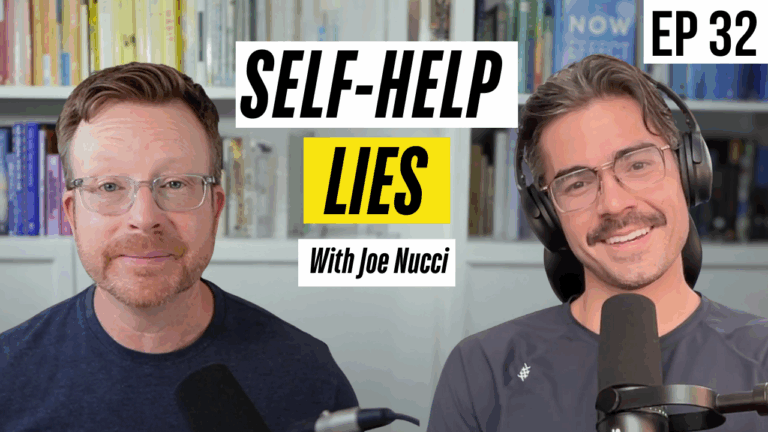
When someone throws around terms like gaslighting or narcissist, it can feel validating in the moment – but often, it’s misleading and even harmful. In this episode of The Emotional Longevity Podcast, I sat down with Joe Nucci, psychotherapist and author of Psychobabble, to explore how oversimplified self-help and therapy-speak can actually hurt your mental health, and what to focus on instead.
Beyond the Myth of “Therapy Speak”
From gaslighting to narcissism to hurt people hurt people, pop-psychology terms have gone mainstream. They spread quickly because they sound true, but when misused, they distort reality – and can even damage our mental health.
Joe Nucci calls this Psycho-babble: the oversimplified language that feels good to say but keeps us stuck in loops of blame, shame, and disempowerment. In this episode, we unpack why we fall for it – and how to tell what’s real from what’s just noise.
In This Episode You’ll Learn:
-
Why “hurt people hurt people” is a harmful myth
-
The misuse of gaslighting and attachment styles online
-
Why oversimplified psychology goes viral-and why we fall for it
-
The problem with labeling every ex a narcissist
-
How myths can keep you stuck in negative loops
-
Red flags that self-help content is more about clicks than care
-
The risks (and potential) of AI in mental health
From Confusion to Clarity
Pop psychology can feel comforting in the moment-especially when it promises quick explanations for our pain. But as Joe reminds us, real healing comes not from shortcuts, but from clarity, boundaries, and a willingness to look deeper.
Instead of getting stuck in labels, we can:
-
Keep it simple. Use everyday words instead of jargon.
-
Check the source. Ask where the advice comes from and if it’s backed by research.
-
Notice the intent. Is this content helping-or just selling?
What This Means For You
If you’ve ever been confused or even hurt by online self-help, this episode is your reminder: you don’t need more jargon—you need practices that genuinely support your emotional health.
Here’s what you can try today:
-
Question the buzzwords. Ask yourself: Does this term actually describe what’s happening?
-
Look beyond labels. Instead of “narcissist,” consider if someone is acting immature, selfish, or just overwhelmed.
-
Focus on growth. Replace fixed stories (“This is just who I am”) with growth-based ones (“I can learn to handle this differently”).
-
Final Thoughts: Self Help That Actually Helps
-
The promise of emotional health isn’t found in quick-fix buzzwords-it’s in the ongoing practice of discernment, compassion, and growth.
-
As Joe puts it, psychobabble might sound smart, but it keeps us at the surface. Real change comes when we go deeper-into presence, practice, and self-awareness.
Want to Go Deeper?
Uncover the Power Within isn’t just a coaching program, it’s a supportive space to strengthen emotional resilience and build meaningful connection. With the support of a trusted community and science-backed guidance, you’ll learn how to regulate your nervous system, reduce overwhelm, and create more emotionally safe, fulfilling relationships—starting with the one you have with yourself.
If you’re ready to live with more intention, clarity, and connection, schedule a call with me to explore what’s possible.
Subscribe to The Emotional Longevity Podcast for more conversations that inspire personal growth, emotional resilience, and thriving relationships.
If this episode resonated with you, consider sharing it with someone who may be feeling disconnected or navigating relationship challenges. It might be the reminder they need – that healthy love isn’t about perfection, but about presence, repair, and learning to grow together. They can listen to this episode of The Emotional Longevity Podcast or read this blog.
Take care of yourself – and remember, every strong relationship starts with emotional awareness, compassion, and a willingness to show up.